Home / Test platform
Test platform
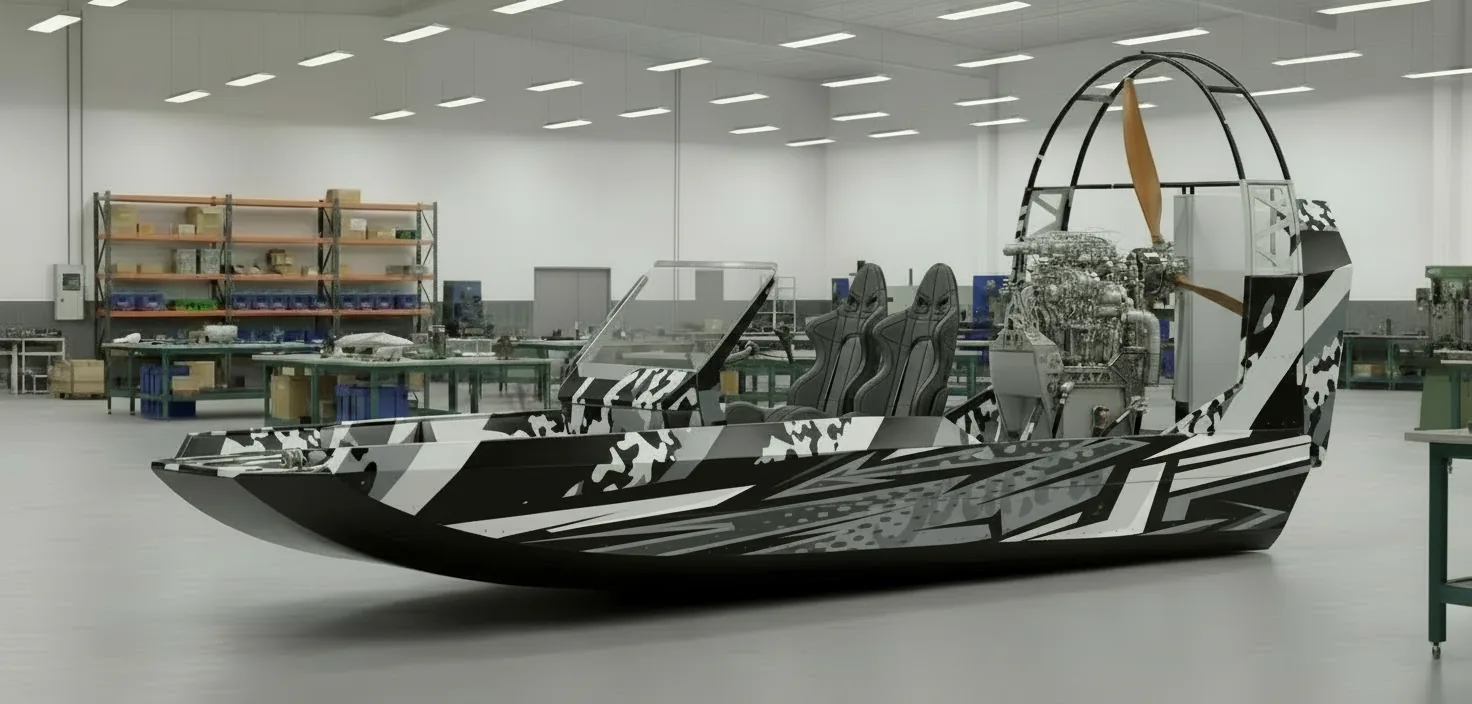
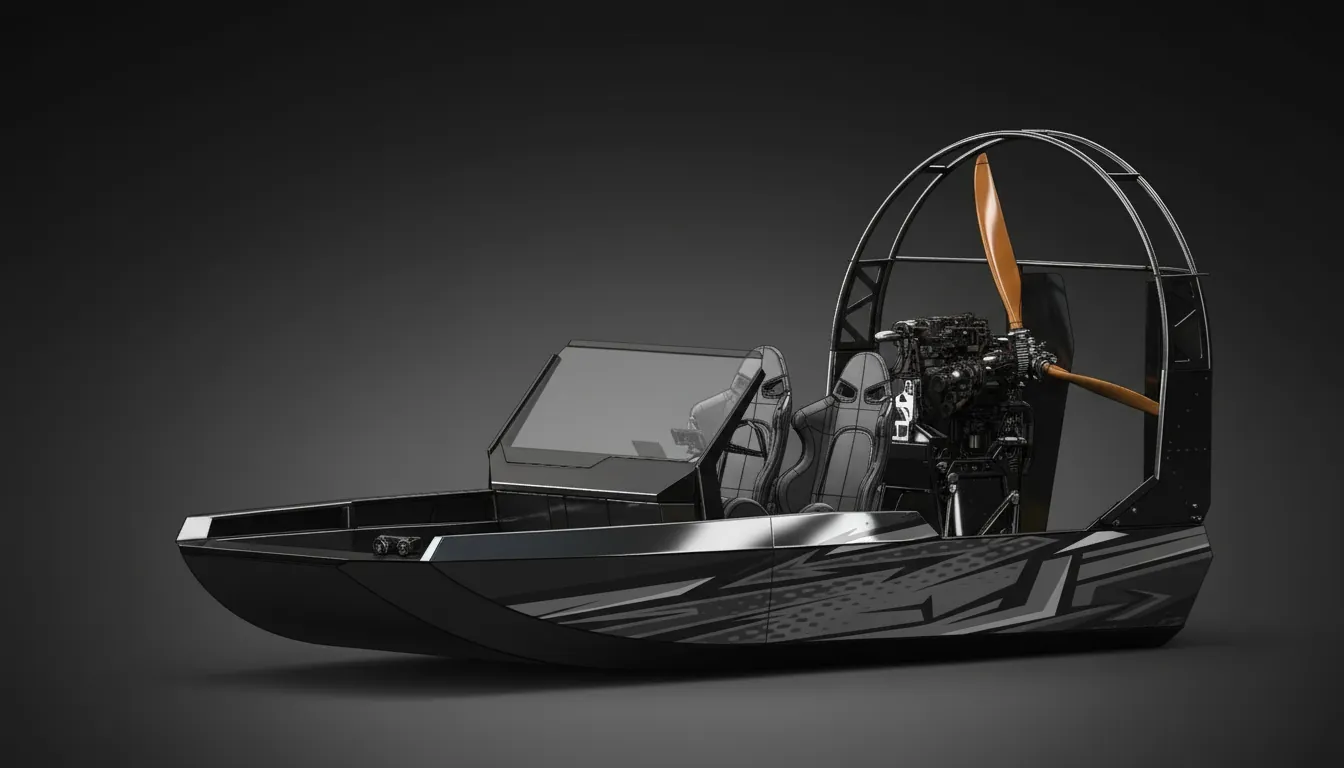
We are building our own test platform to check every system in real conditions before it reaches you.
We are building our own test platform to check every system in real conditions before it reaches you.
Everyone who builds an airboat or an off-road vehicle dreams of the ideal machine — and of giving their customers the best. On the platform we give this dream its shape, test after test, so that it becomes your product.
On board is our own electronics: the Dash-6.8 instrument panel designed for planing boats and airboats, the sealed Cat-GDI4 engine control unit and a power distribution module (PDM) that switches and protects the loads. They share one CAN bus, so the harness has the fewest wires and runs, and the whole system is set up from one BrainBus application.
Another goal is tuning turbocharged direct-injection (GDI) engines: we want engines that are light, powerful and economical at the same time.
Our aim is to get the most out of the whole system: maximum economy, performance, reliability and ergonomics.
Assembled like a construction kit — for different powertrains and different goals.
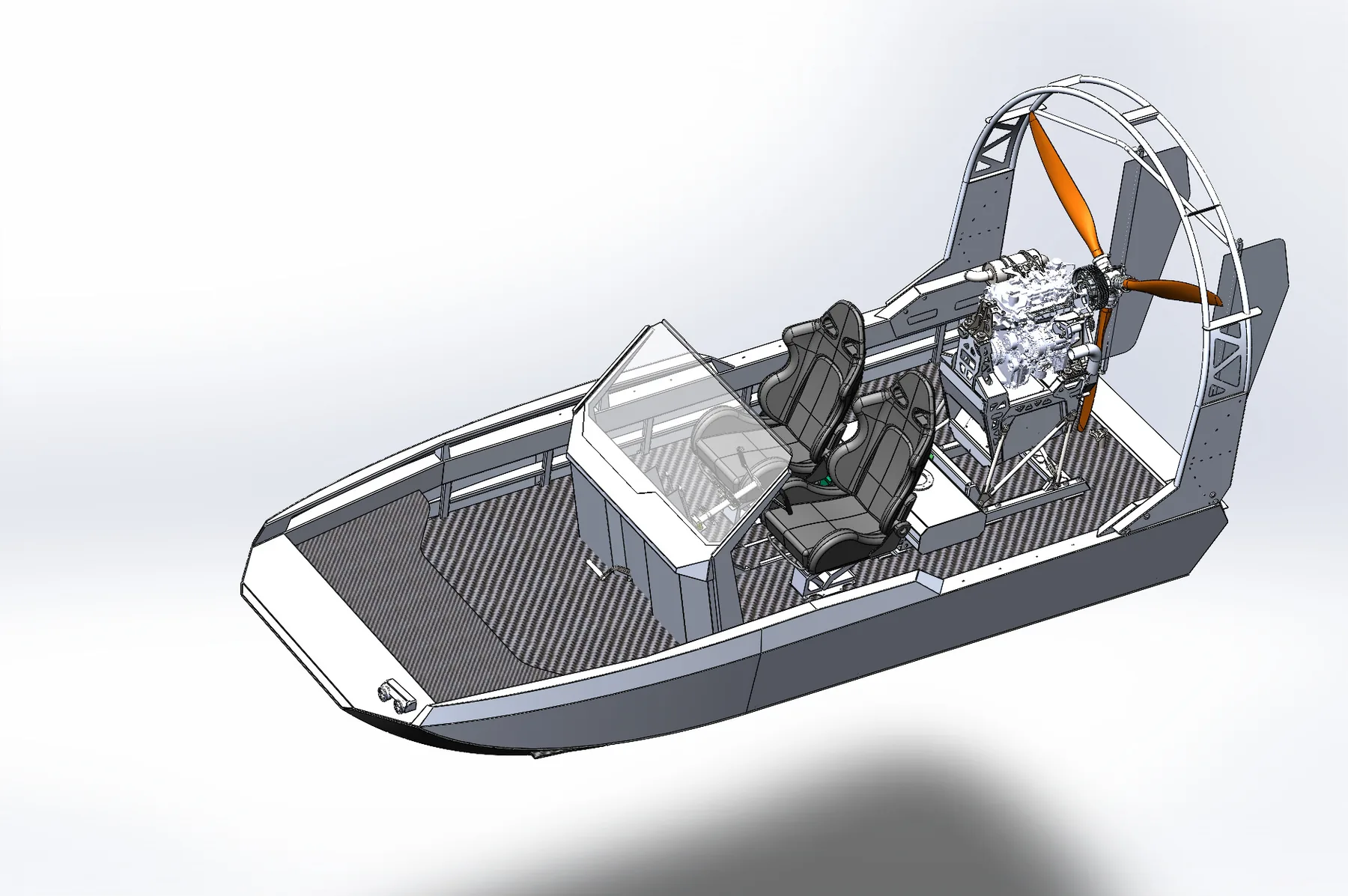
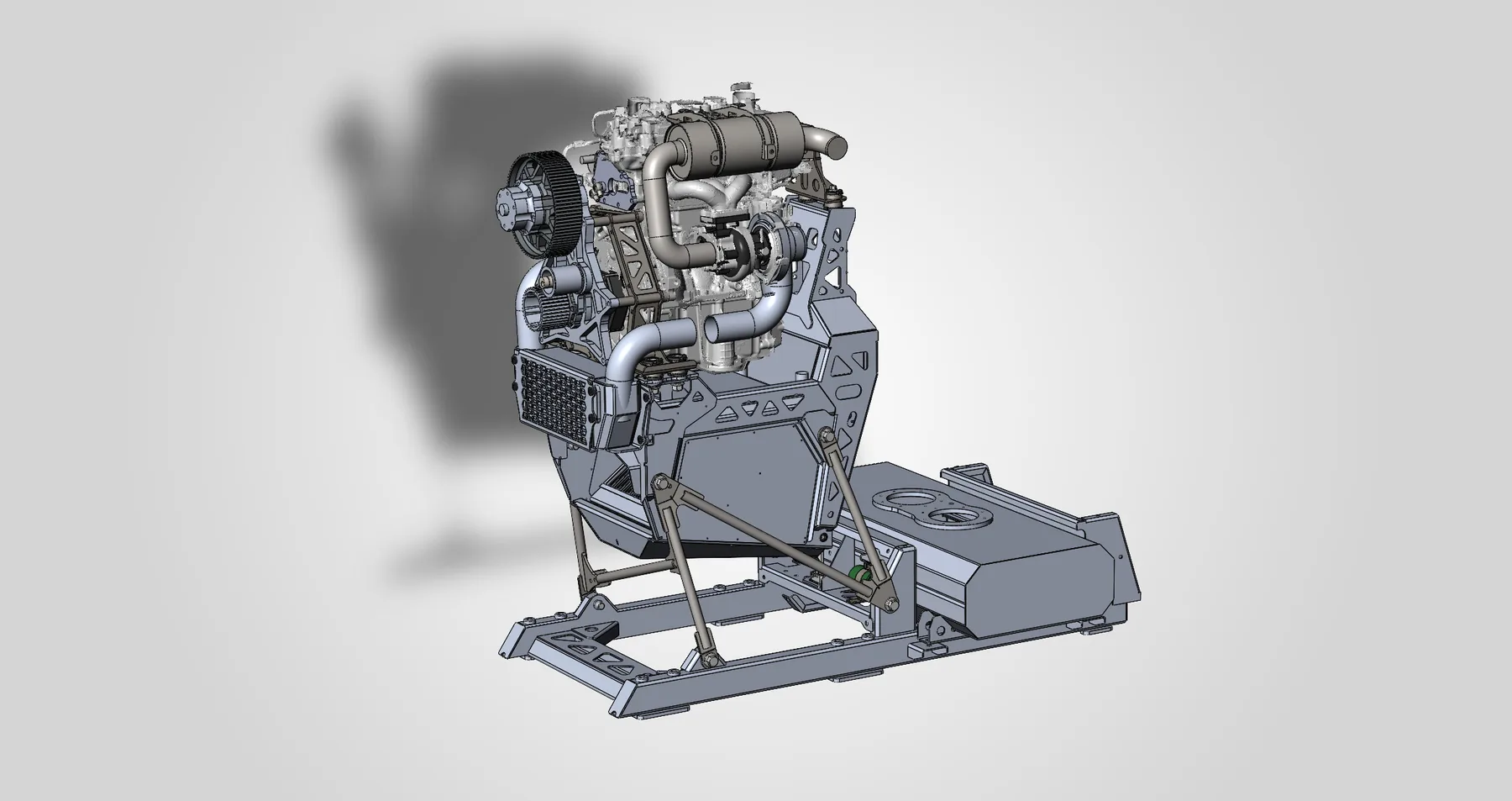
We made a hull that is assembled like a construction kit: the console, the seats and the whole powertrain are removable, so the platform takes different powertrains and serves different test goals.
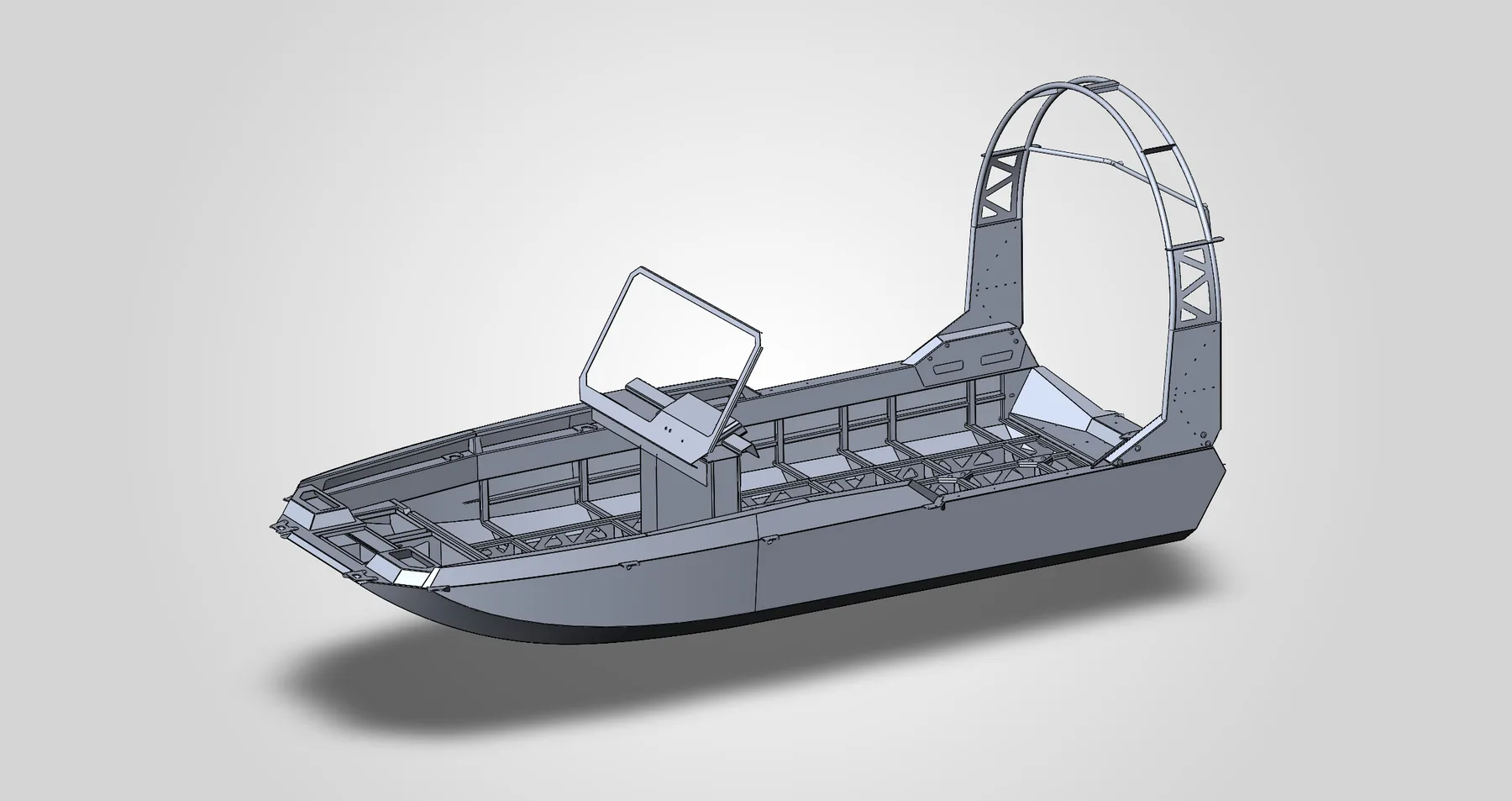
An all-welded aluminium hull, welded together with the air propeller guard.
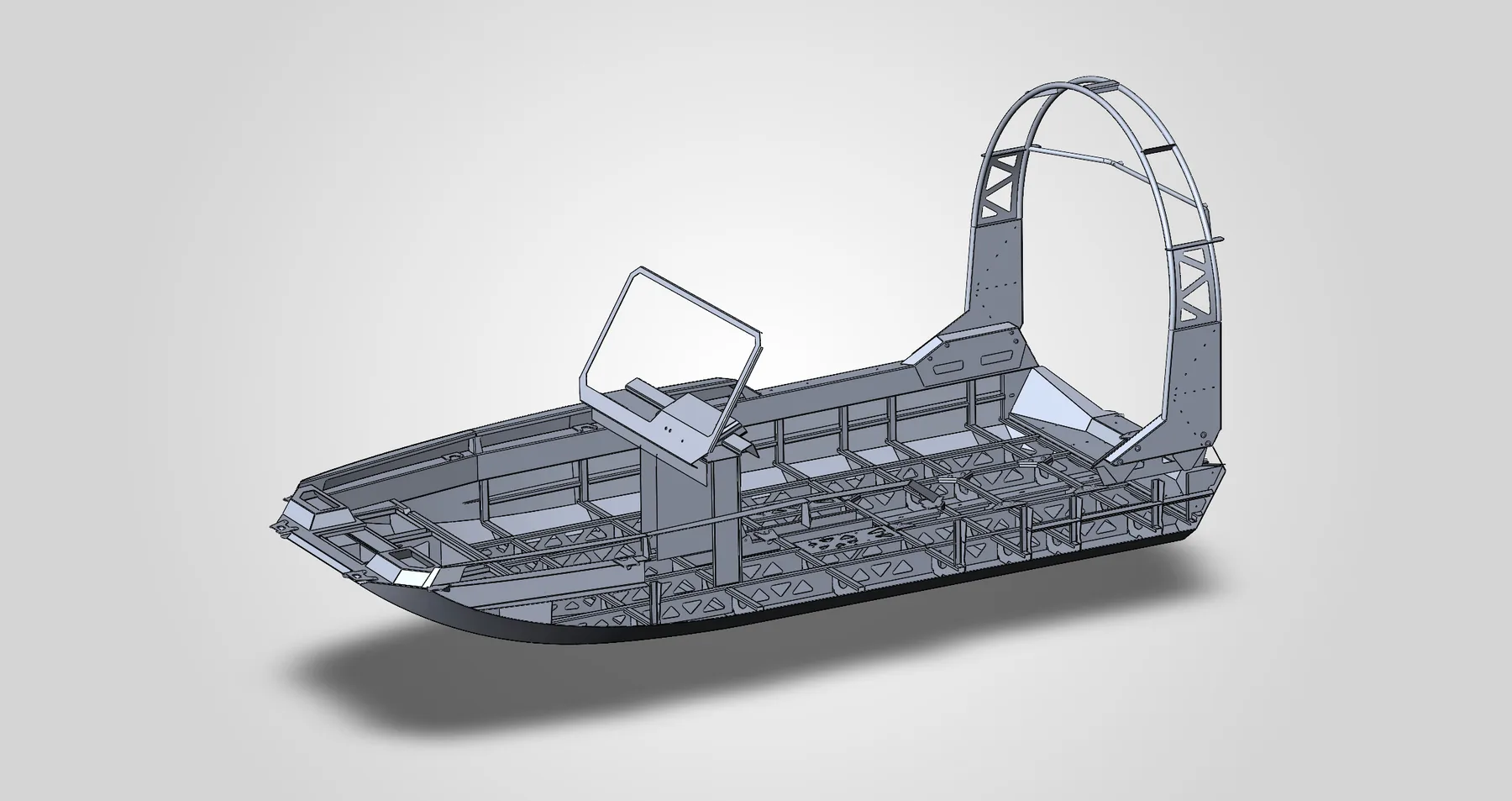
The frame inside the hull is lightened as far as possible: every part that does not carry load is cut out.
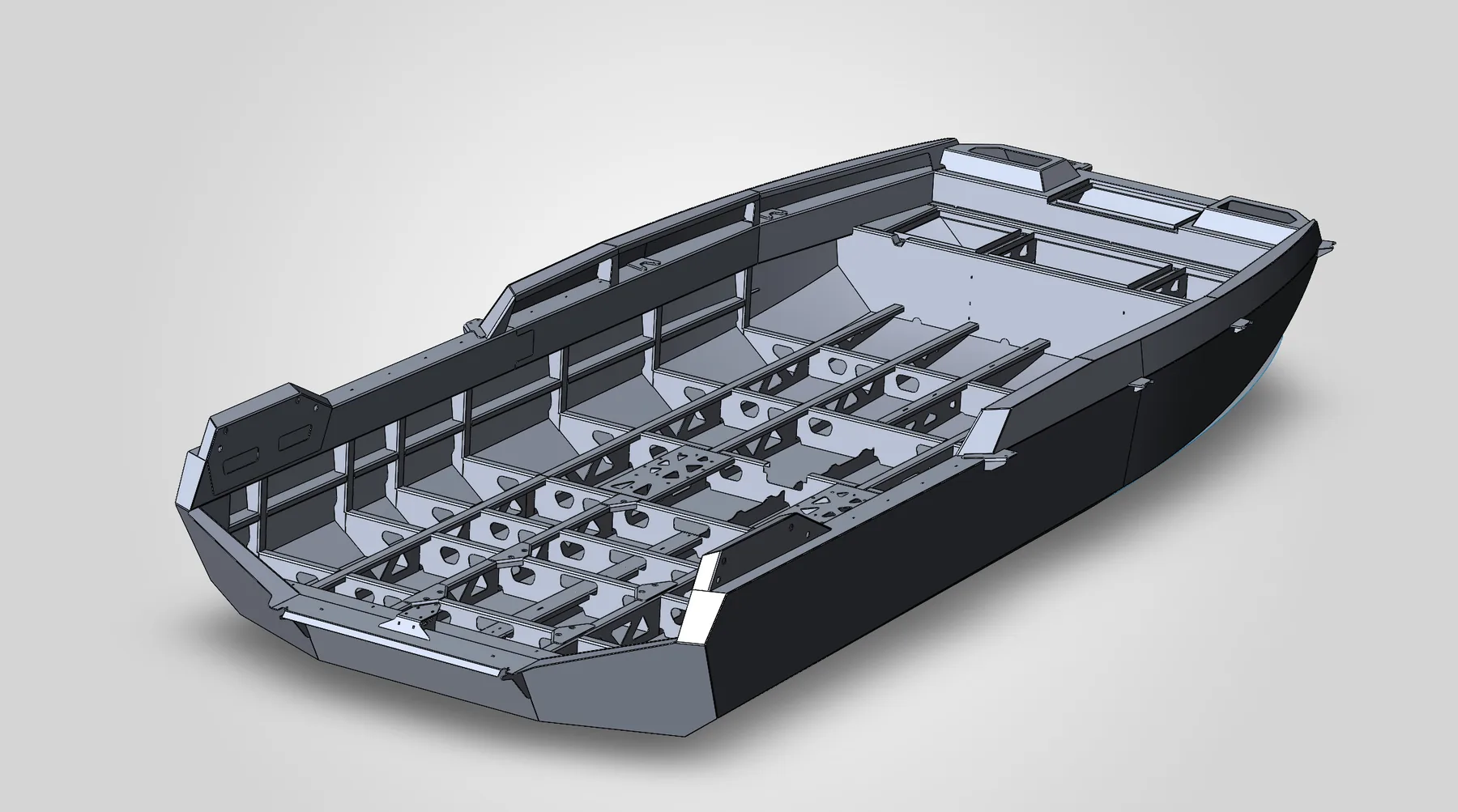
Everything mounts onto the frame, so the platform can be rebuilt quickly for a new test.
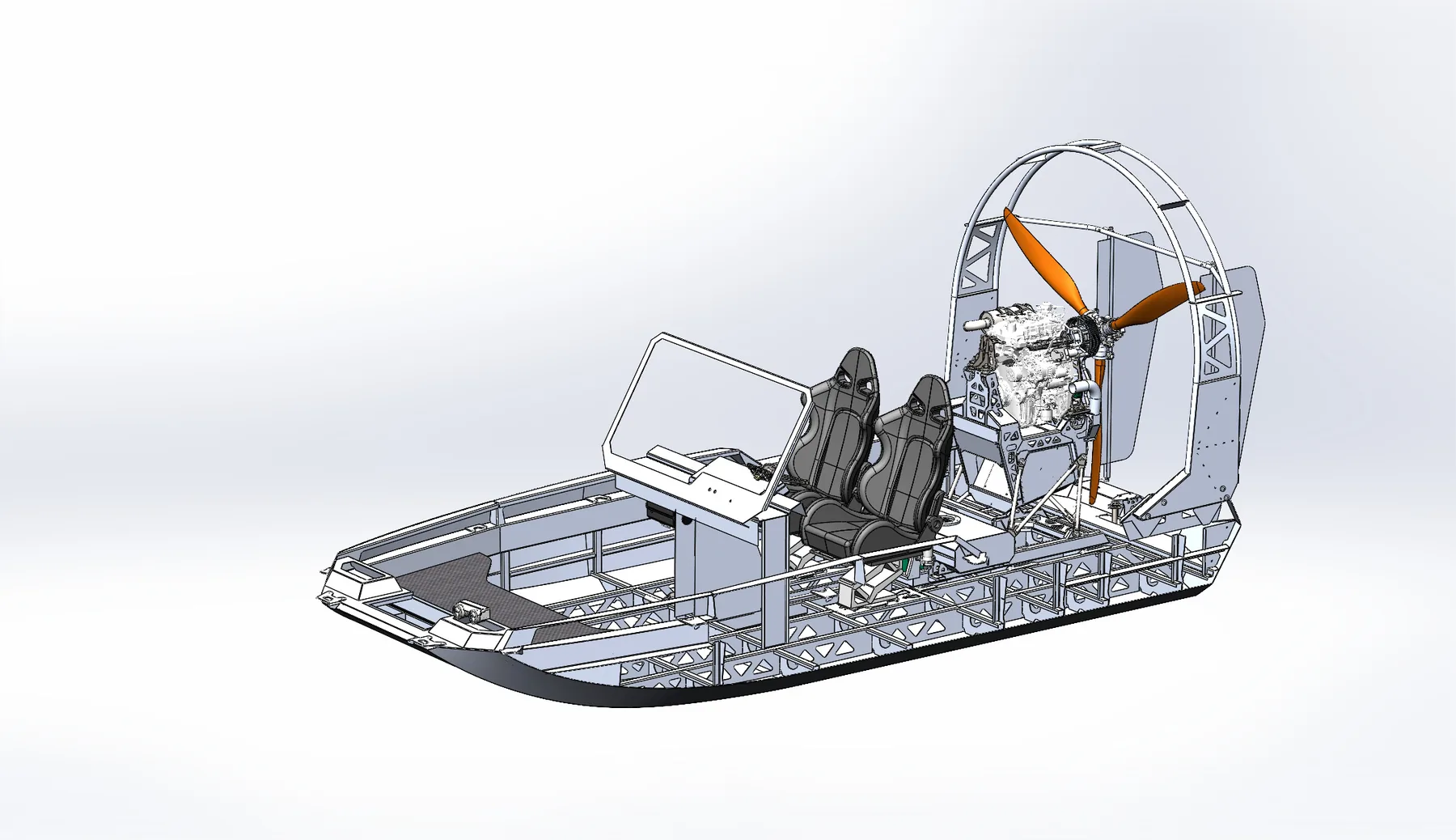
The guard and its mounts are reinforced for tougher tests.
The most important part: we designed this powertrain to test and tune our electronics — the Cat-GDI4 engine control unit for turbocharged direct-injection engines.
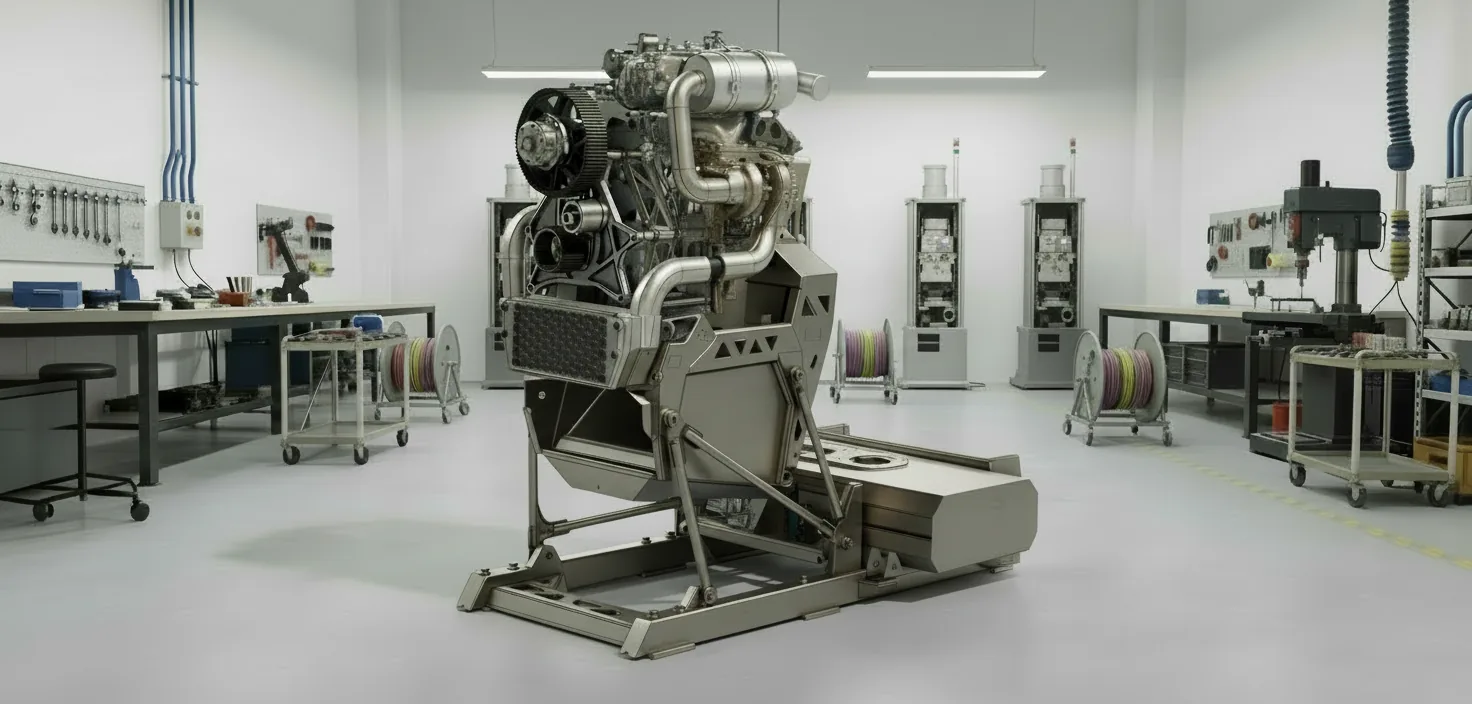
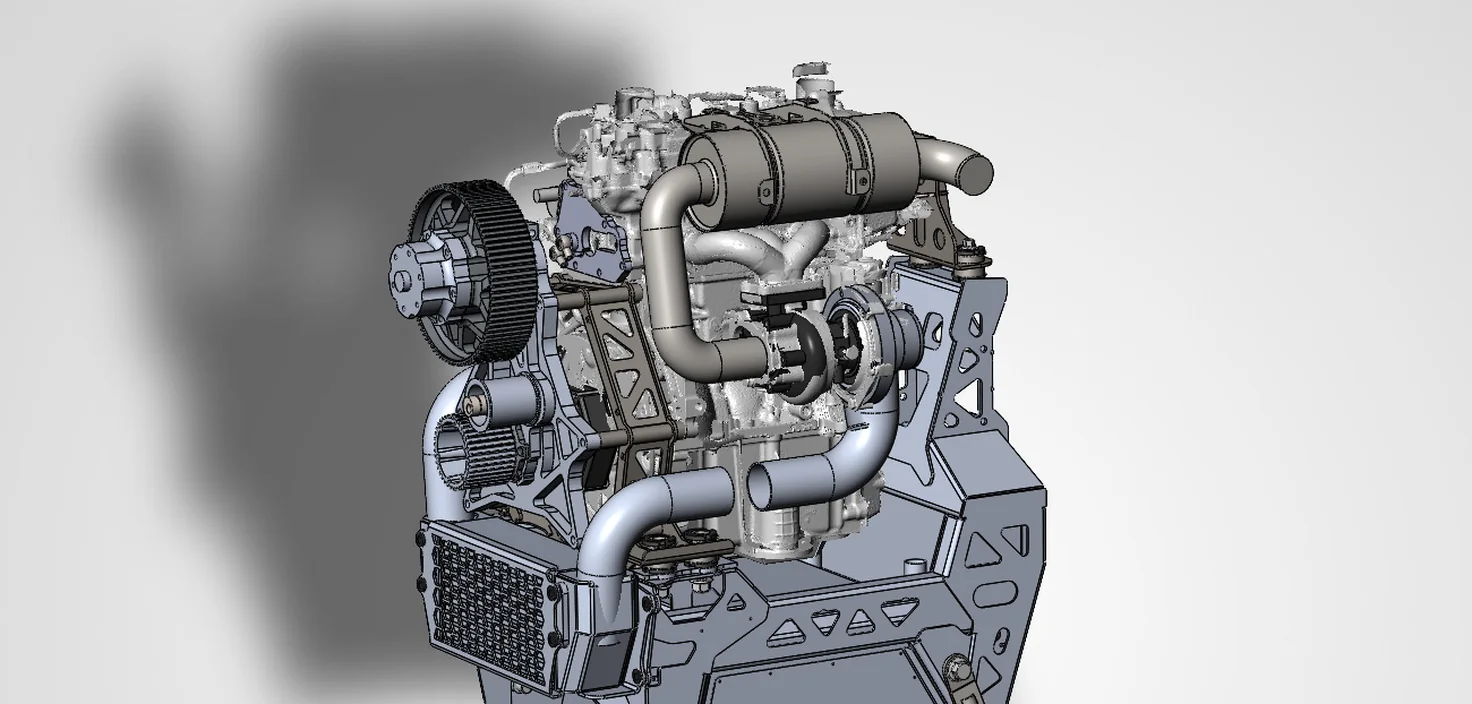
The base is a 1.2 L Nissan engine with direct injection — compact, aluminium and light. We improve it so that the electronics can show what the engine is capable of.
The factory supercharger is replaced with a turbocharger. Its wastegate is driven by an electric actuator controlled by the engine control unit, so boost is set and limited precisely.
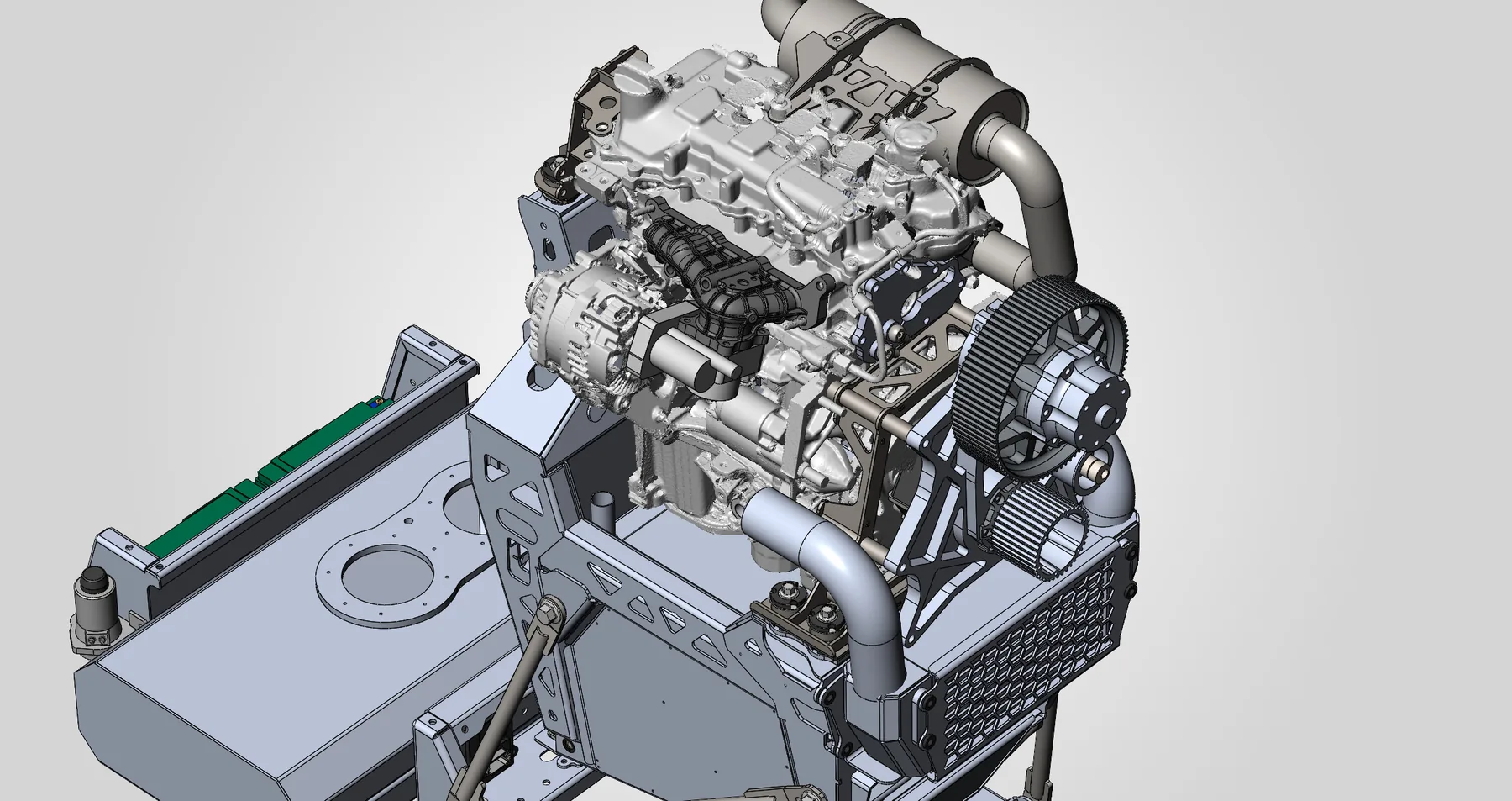
The intake manifold is redesigned and a new intercooler is made, with the shortest possible path from the turbo to the cylinder head — boost builds fast, without lag.
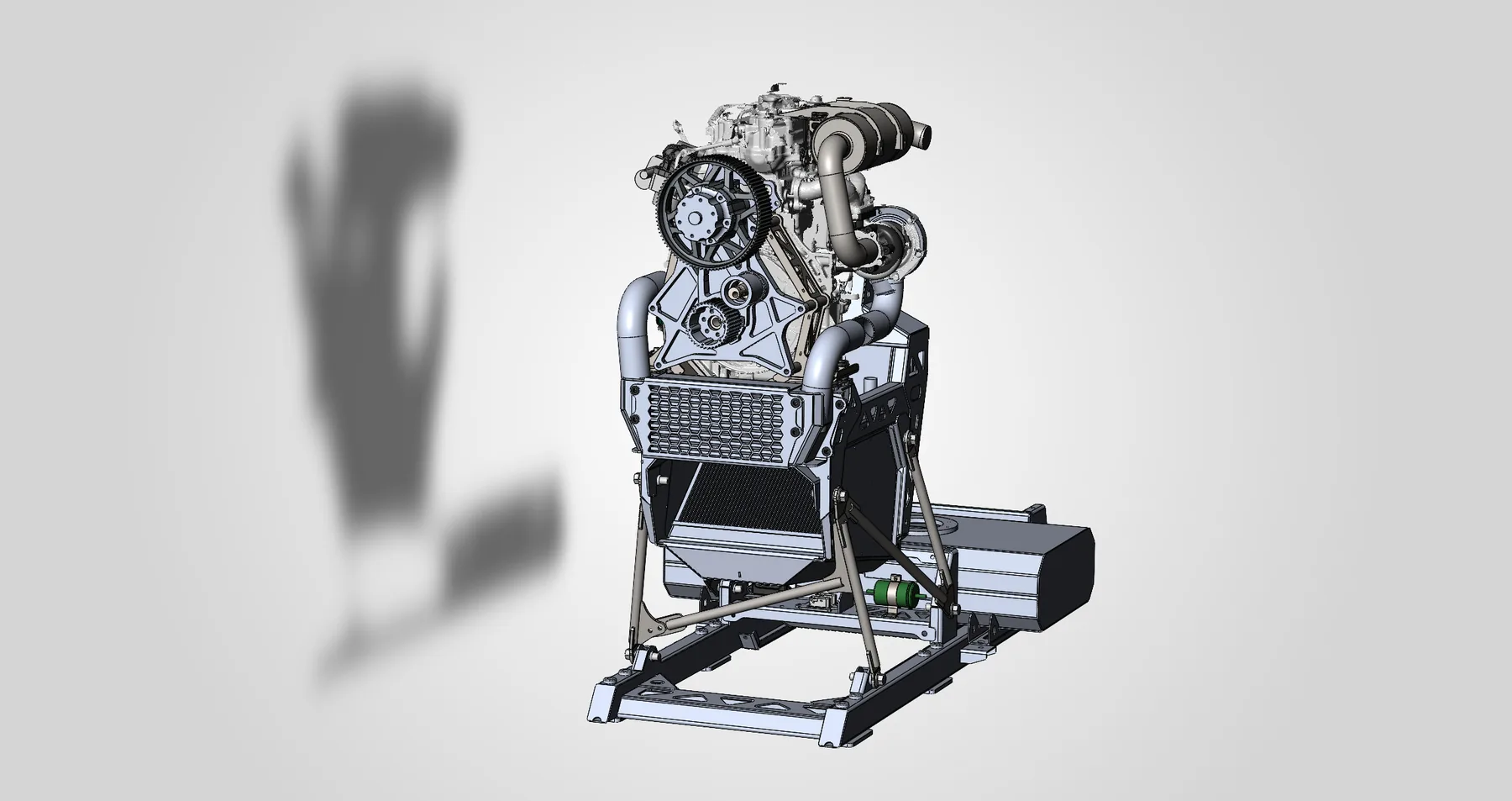
A light belt reduction drive designed for this engine, with sealed bearing units and a coupling that damps vibrations between the propeller and the engine.
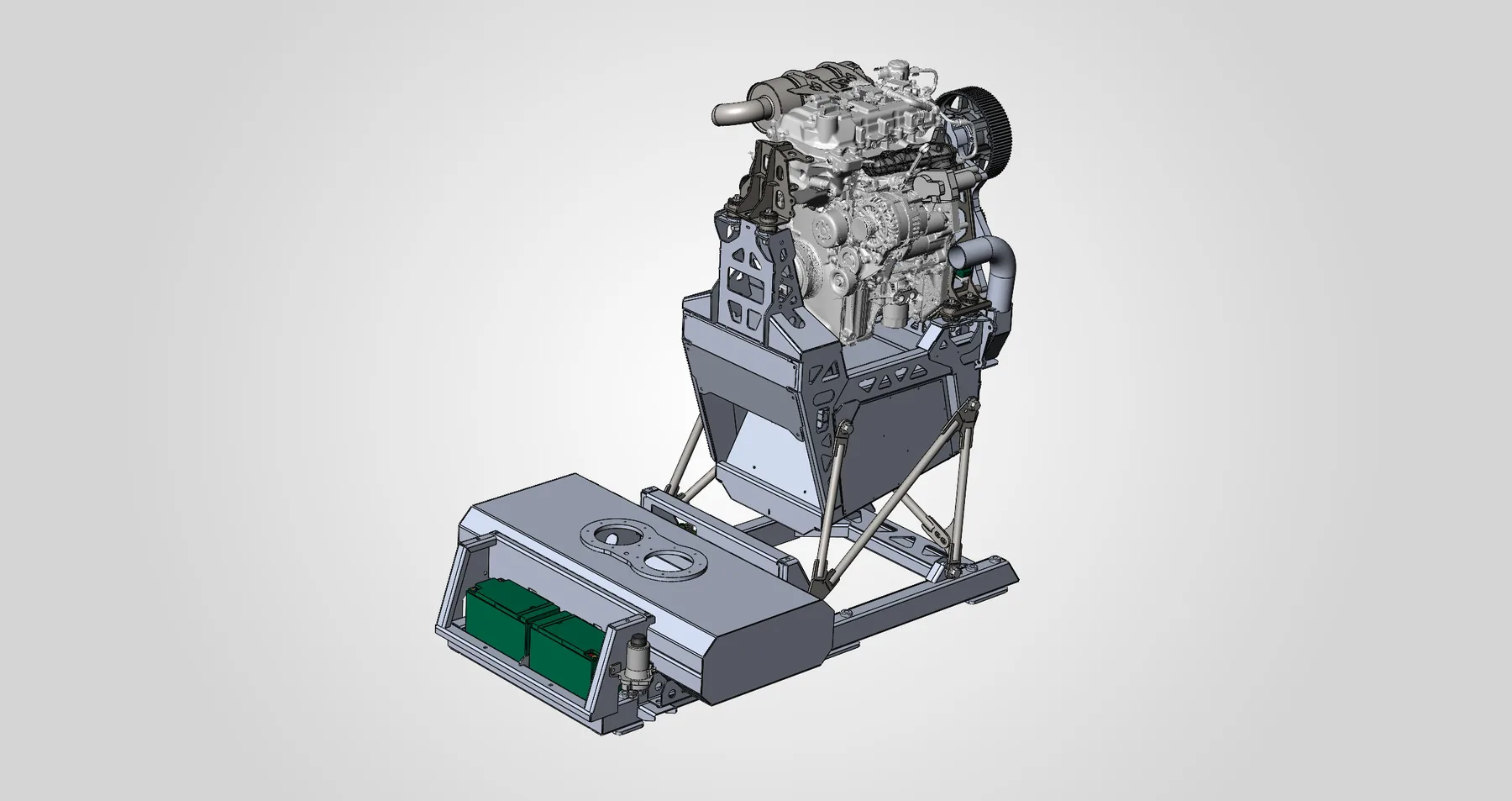
Two pumps in the tank switch over automatically or by hand: the fuel pressure in the rail is always kept, and there is always a backup pump.
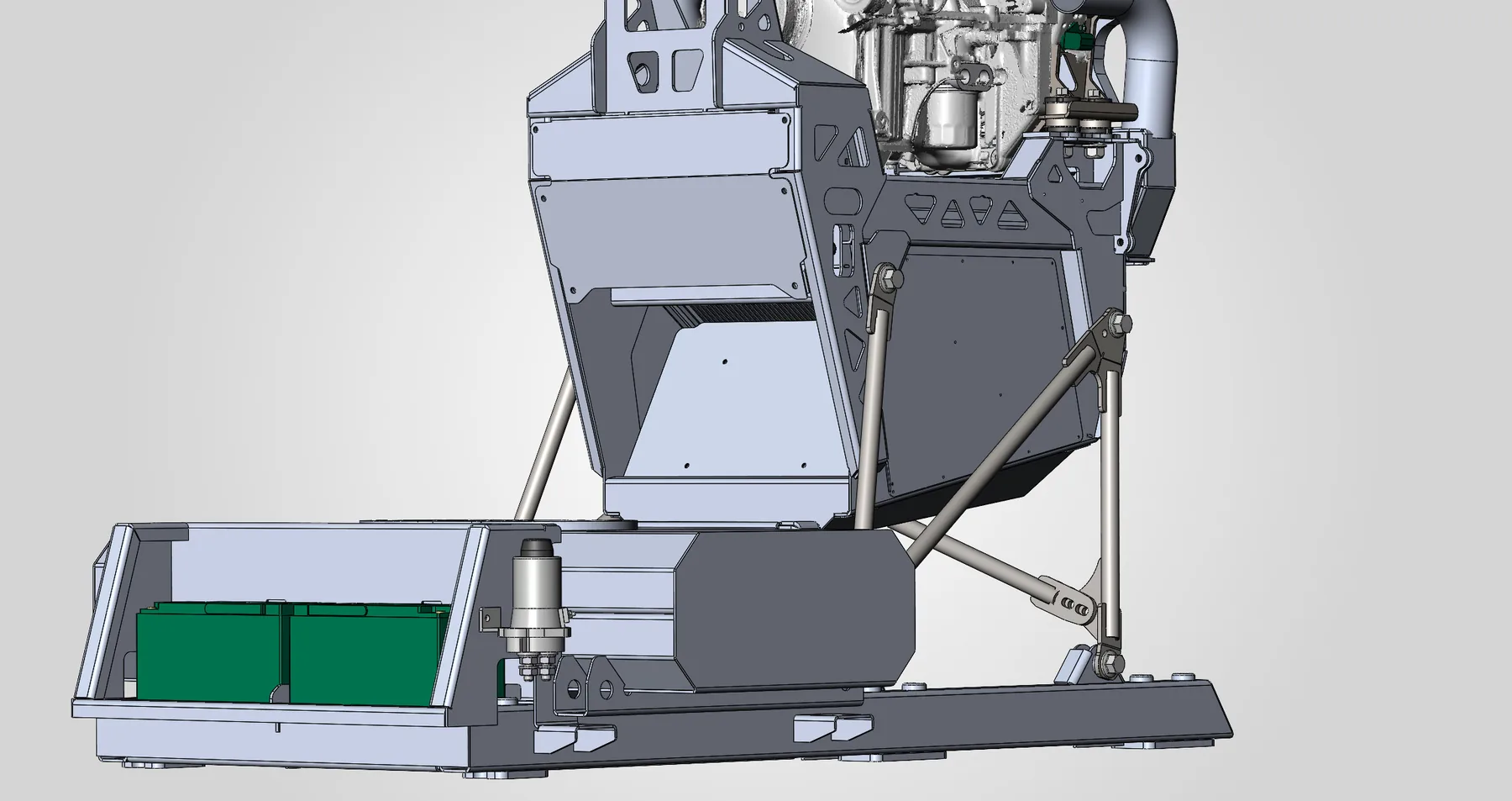
The radiator sits inside the cowling, and a flap opens and closes it as needed: in winter the engine warms up fast, in summer it does not overheat.
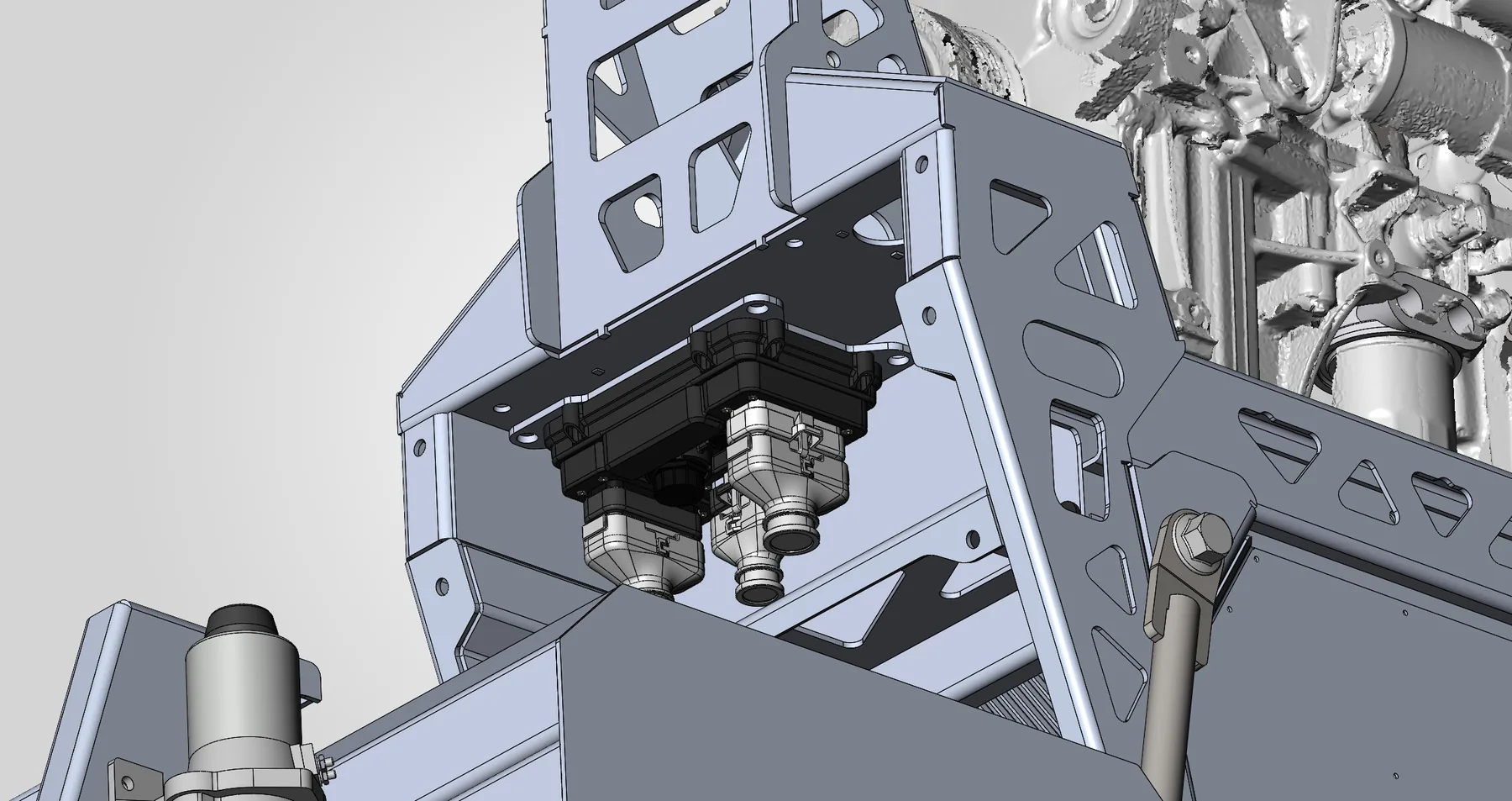
Torque-based control of the turbocharged direct-injection engine, auto-start and diagnostics: every fault is checked and reported to the Dash-6.8 over CAN.
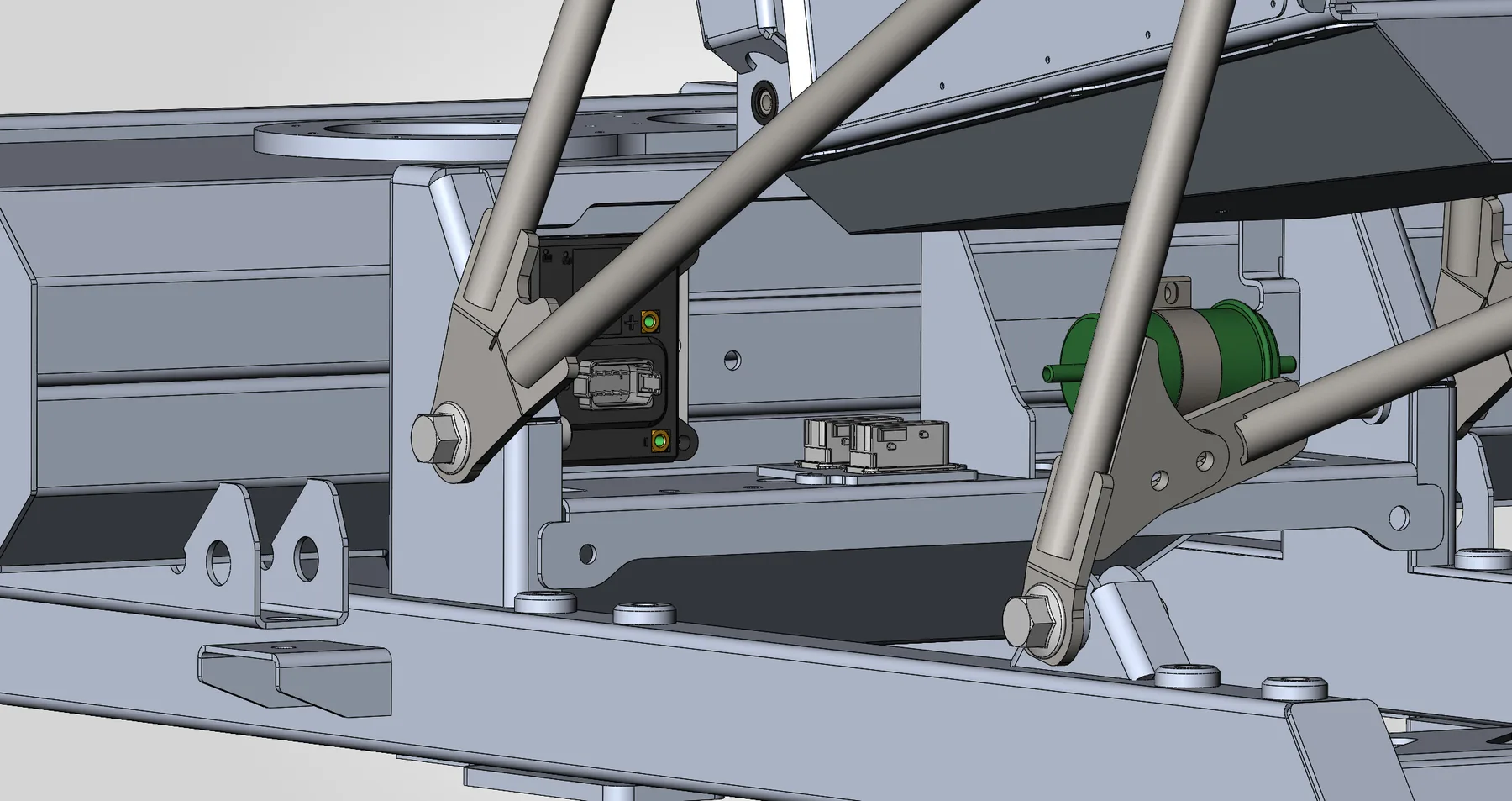
The built-in PDM switches and protects the pumps, actuators and control units and reports every fault and open circuit over CAN. The powertrain needs only the ignition signal and the command to start.
A light, powerful and economical engine with reliable communication, clear diagnostics and fault reports — run by our Cat-GDI4 and set up through BrainBus.
From the first 3D model to the tests on water.
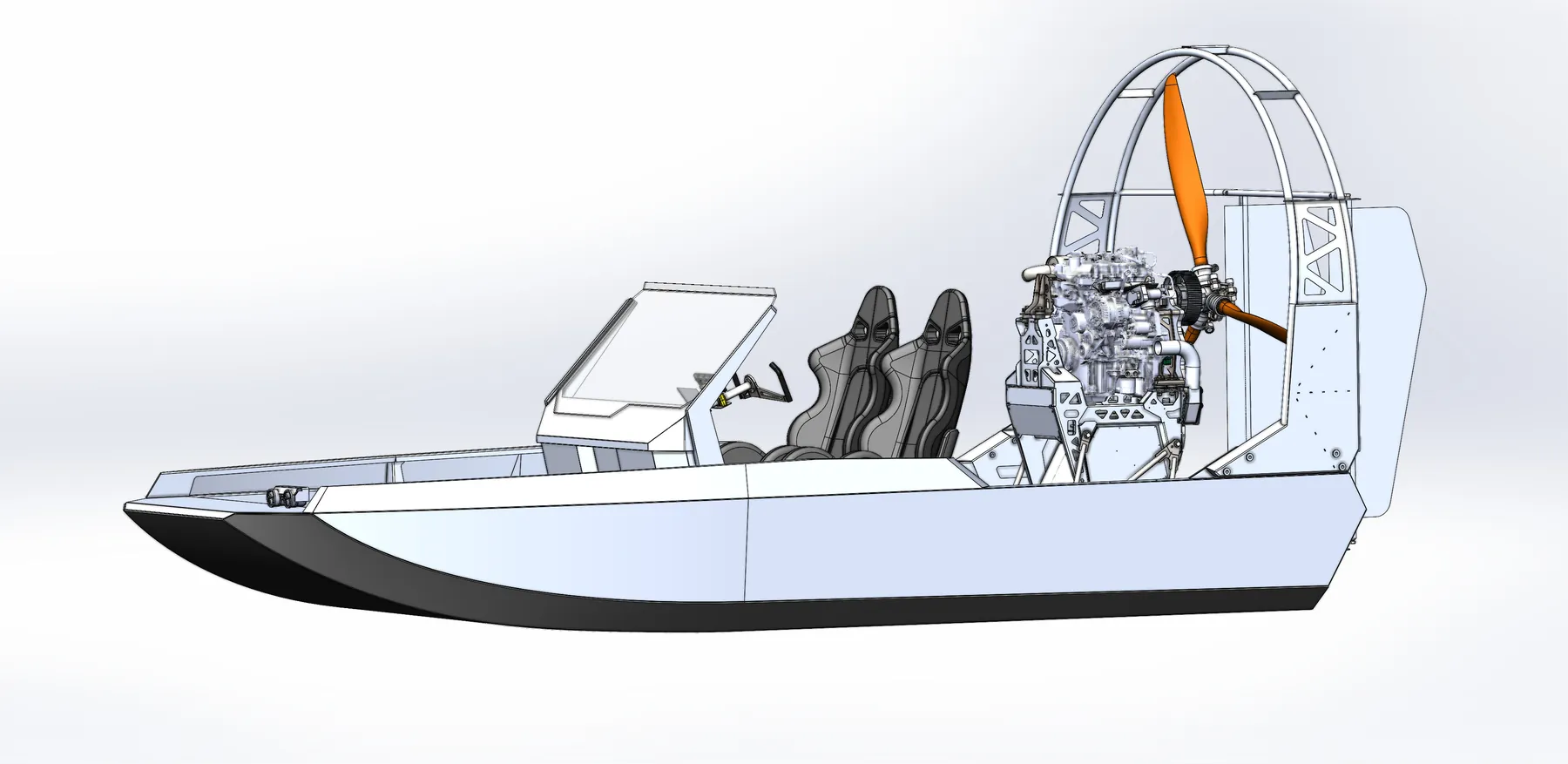
The hull, the air propeller guard and the engine frame are designed in 3D.
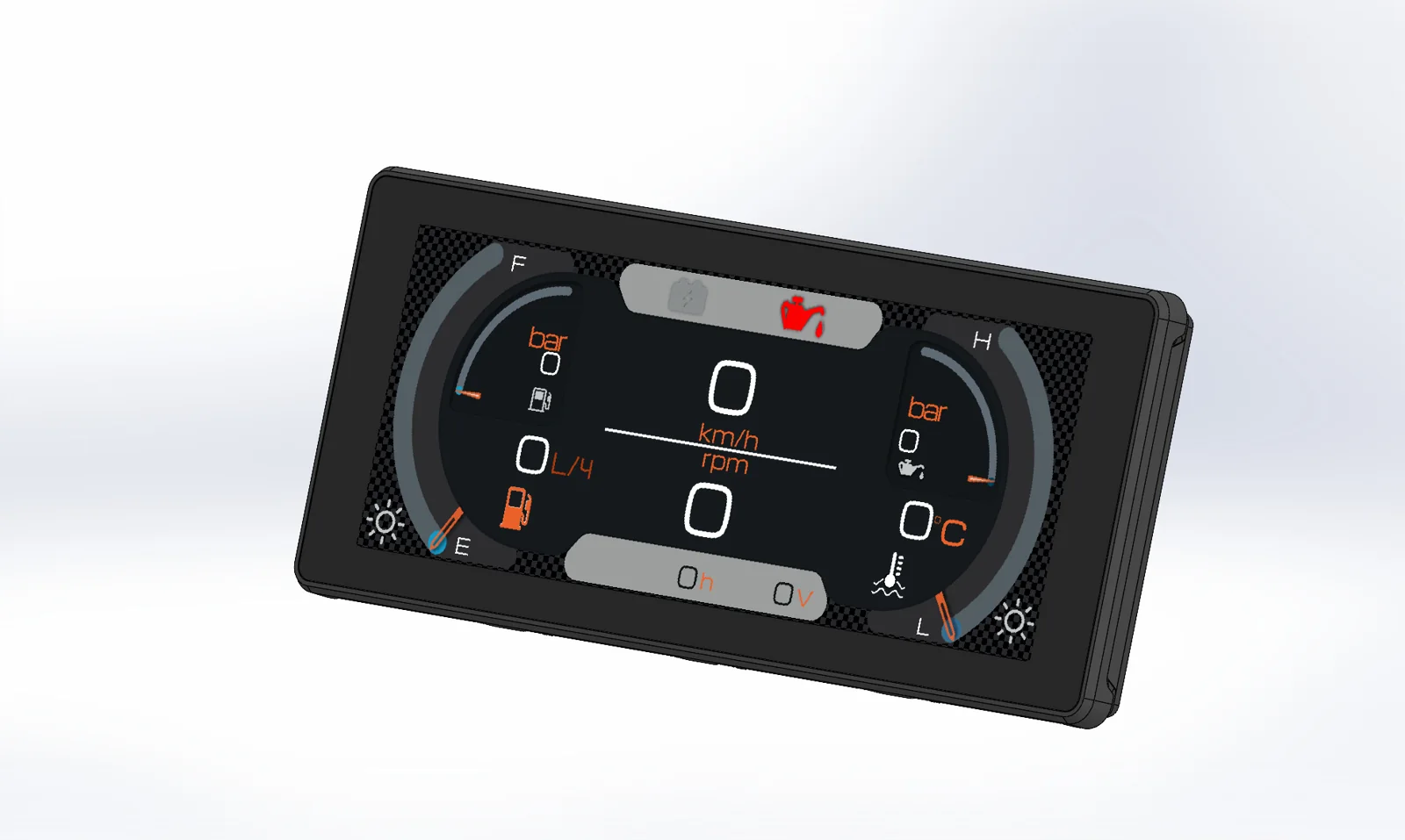
Instrument panel, engine control unit, PDM and software — the electronics the platform is built for.
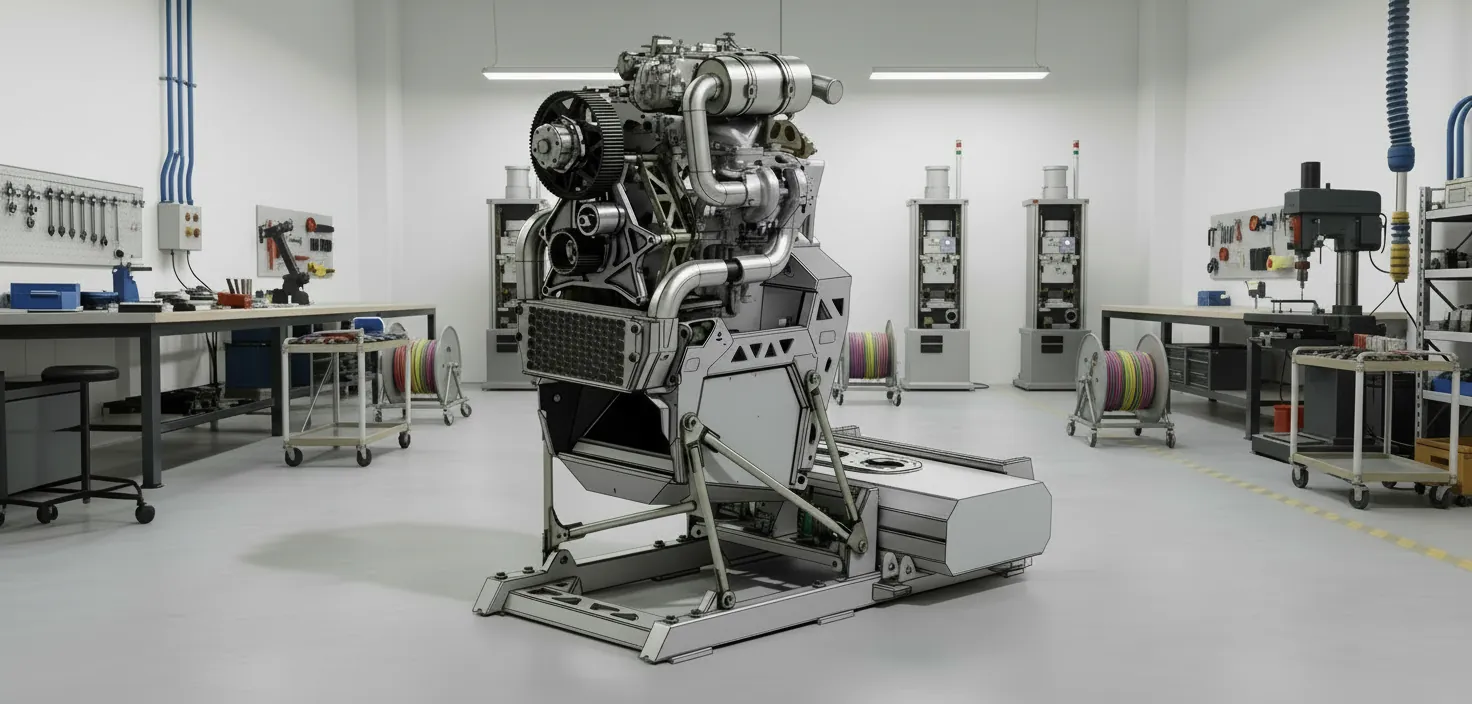
The turbocharged powertrain with its cooling system and belt reduction drive is designed.
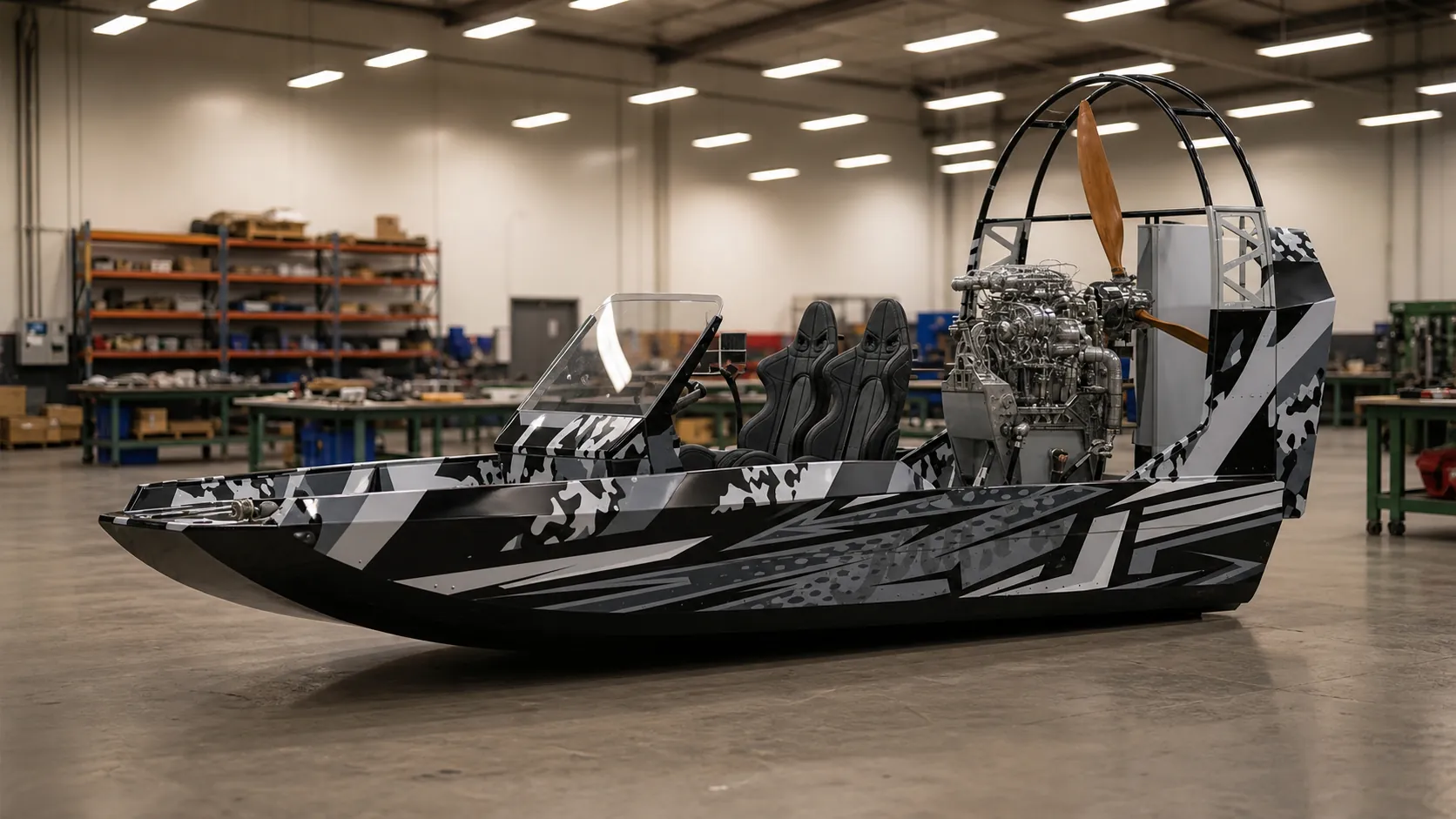
Hull, powertrain and electronics come together; the systems are tested on the bench and on the platform.
The whole system on water: engine tuning under the propeller load, vibration and real operating conditions.
Assembly, first engine start and tests on water — on video, as the boat comes together.